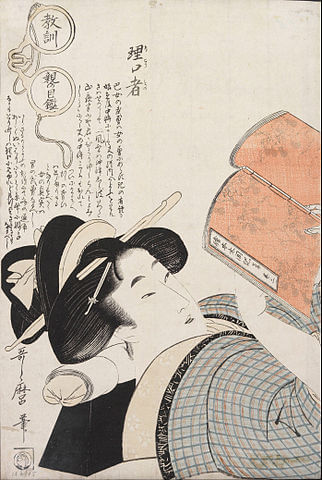
理口者 (Riko-mono) / The Know-It-All / The Clever One by Kitagawa Utamaro
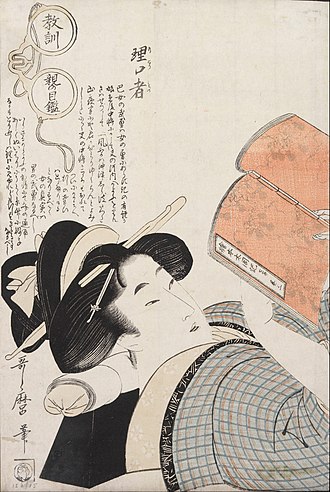
Dimensions: 37.3 x 25.2 cm, Color woodblock print.
Source: The Know-It-All, Kitagawa Utamaro, Bilbao Fine Arts Museum
Bilbao Fine Arts MuseumLa sabelotodo, c. 1802-1803
The British MuseumRiko-mono 理口者 (The Clever One)
Edo-Tokyo Museum教訓親の目鑑 理口者 (Riko-mono)
‘Riko-mono’
The Woman reclining while reading a book.
She is reading Ehon Taikoki while neglecting her domestic chores.
Ehon means an illustrated book, and Taikoki chronicles the life of Taiko Toyotomi Hideyoshi (1537–1598). First published in 1797, this historical chronicle became a massive hit among the Edo public, with 84 volumes in 7 series printed by 1802.
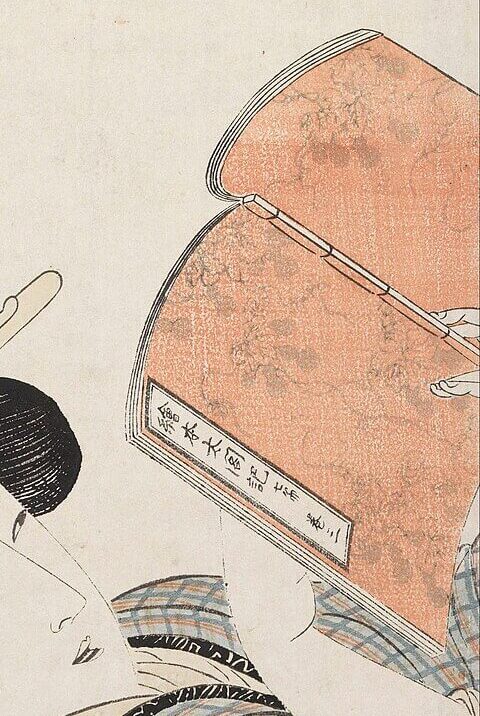
Source: The Know-It-All, Kitagawa Utamaro, Bilbao Fine Arts Museum
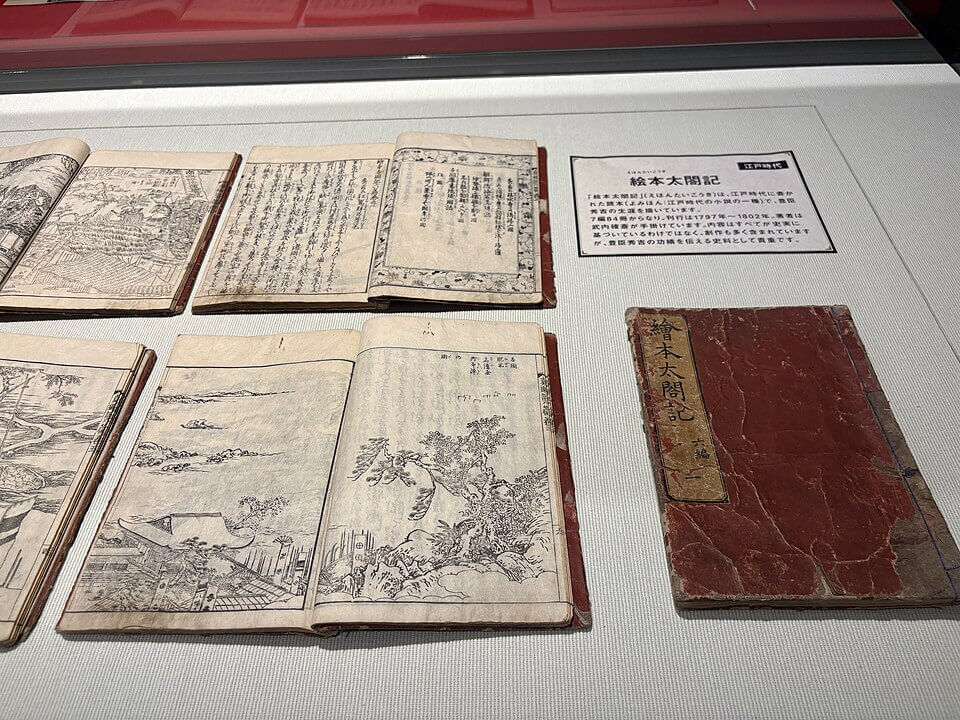
Source: ‘Ehon Taikoki’ (Nagoya Touken world) Kyu3a CC-BY-SA-4.0
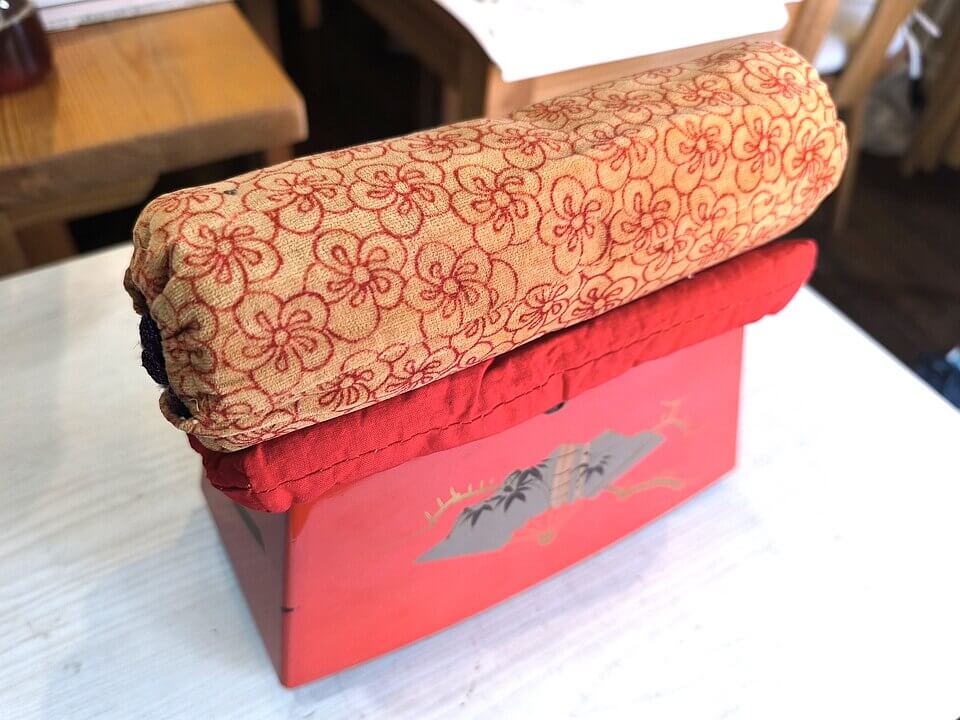
Source: Azuchimakura Keeezawa CC0 1.0
Hakomakura is a traditional Japanese box-shaped wooden pillow.
It was designed to support the neck so that women could protect their elaborate hairstyles while sleeping.
The Counter-Argument to Western Interpretations
While Western museums often interpret this print purely as a moralistic critique of women under Neo-Confucian patriarchism, a closer look at Edo’s material culture suggests otherwise. The text actually pokes satirical fun at her choice of reading a heavy historical chronicle rather than useful domestic handbooks, subtly acknowledging the surprisingly high literacy and intellectual appetite of merchant-class women in 1800s Edo.
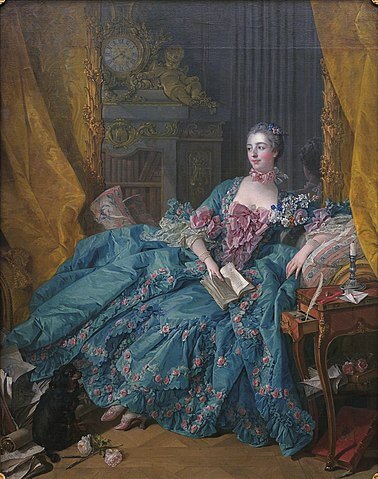
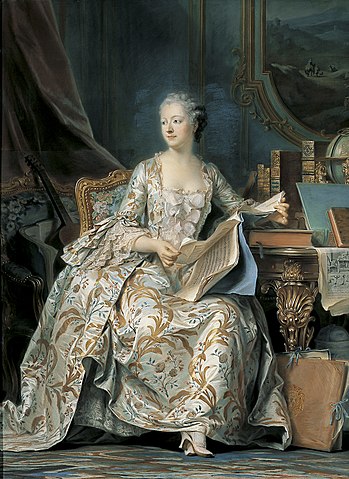
The Contrast: 18th-Century France vs. Edo Japan
In 1750s France, Madame de Pompadour used books in her portraits as a strategic display of high intellect and elite status. In contrast, by 1800, Utamaro’s print reveals that reading an illustrated historical chronicle had become a casual, everyday pastime for ordinary merchant-class women in Edo. This stark contrast highlights the remarkably high literacy rate of Edo, which had already become one of the most educated societies in the world.
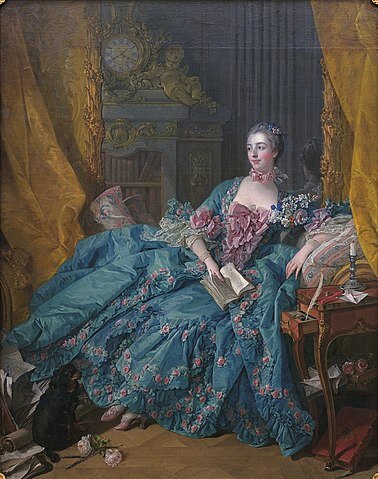
Source: Porträt der Madame Pompadour
Alte PinakothekMadame de Pompadour, 1756
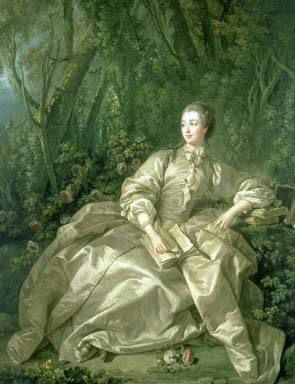
Source: Portrait of Jeanne-Antoinette Poisson, Marquise de Pompadour
Victoria and Albert MuseumPortrait of Madame de Pompadour
🔗 Read the full detailed analysis with source origins in Japanese:
The Flawed Daughter vs. The Clever One: Utamaro’s Sarcastic Irony
On the surface, this print functioned as a visual manners guide under the series title Kyokun Oya no Megane (A Parent’s Moralizing Spectacles). It warns parents against raising a flawed, “unruly” daughter who shamelessly abandons her domestic chores and needlework just to lie down and read. Utamaro textually labels her a “reason-mouthed” woman (Riko-mono)—a sarcastic play on words criticizing her for becoming too argumentative and pedantic.
However, Utamaro’s visual execution reveals a deep irony. The book she is so intensely immersed in is not a simple romance comic, but Ehon Taikoki, a heavy and sophisticated military chronicle that required high literacy to comprehend. By framing her intellectual appetite as a “bad habit to be corrected,” Utamaro counterintuitively captures the true essence of a “Clever One” (The Clever One)—a merchant-class woman possessing an extraordinary level of education and independent spirit in 1800s Edo.
About the Cartouche
This unique cartouche is shaped like eyeglasses (megane), reflecting the title Parents’ Moral Spectacles. In this series, Utamaro categorizes women into different personality types.
The left lens displays “Kyōkun” (Lessons), while the right lens displays “Oya no Megane” (Parents’ Spectacles).
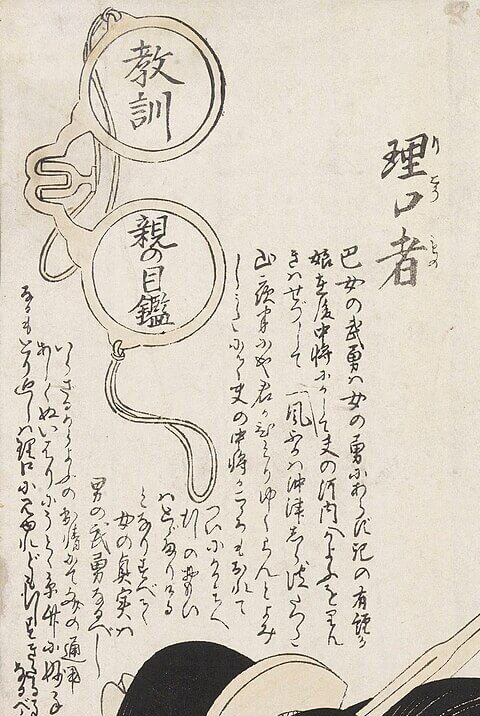
Source: The Know-It-All, Kitagawa Utamaro, Bilbao Fine Arts Museum
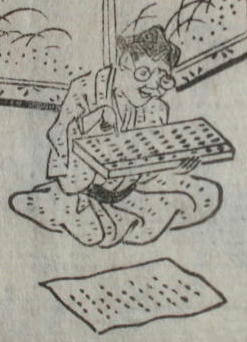
Source: 18th-century eyeglasses